
Bio-Adaptive Multisensory Platform for Defense
Sensory Reality™ (SR) is a bio-adaptive, closed-loop platform combining multisensory simulation (visual, audio, scent, airflow, vibration, temperature/NIR) with real-time biofeedback (HRV, respiration, GSR, EEG) and AI-driven adaptation. It strengthens resilience before exposure, supports rapid decompression immediately after critical incidents, and enhances post-mission trauma recovery — complementing CBT/EMDR and reducing reliance on medication.
-
+20–35% HRV improvement after short SR protocols.
-
~30% reduction in anxiety / arousal.
-
10–15 minutes for acute decompression immediately post-incident.
SR in Defense Context
A short film illustrates operational use-cases across pre-mission, in-mission and post-mission workflows — from base training suites to forward-deployed reset pods.
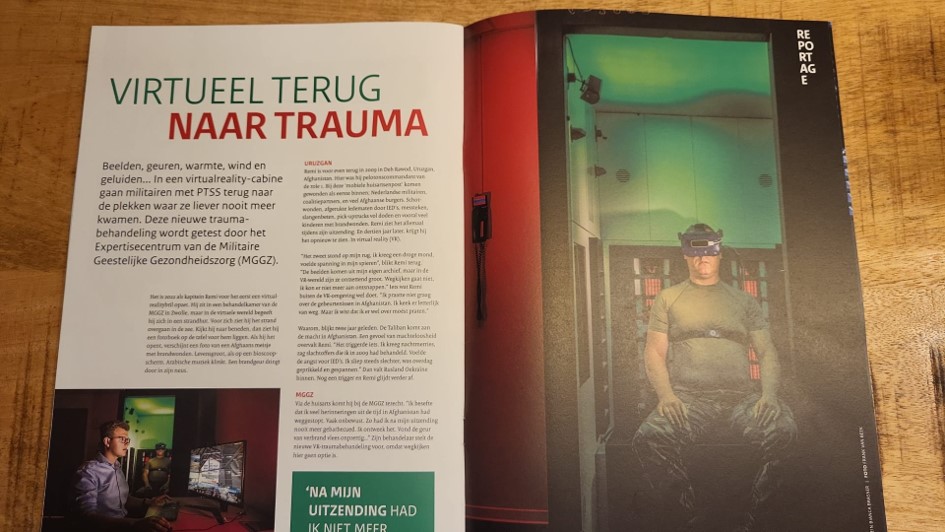
Short film showing how Sensory Reality™ is used with veterans for PTSD treatment in collaboration with TNO and the University of Amsterdam.
Pre-, During- and Post-Mission Support
Sensory Reality™ aligns with the full operational cycle — strengthening resilience before deployment, protecting decision-making and cohesion during operations, and supporting long-term recovery afterward.
1) Pre-Mission — Stress Inoculation
Controlled multisensory exposure to combat-like stressors builds autonomic control and cognitive performance under pressure.
- Immersive simulation: heat, vibration, wind, smoke, auditory chaos.
- Biofeedback coaching: breathing, HRV, attention control.
- Adaptive dosing: gradual desensitization & readiness metrics.
2) During Mission — Acute Decompression
Immediately after stressful events, SR sessions down-regulate sympathetic drive and prevent maladaptive consolidation of traumatic memories.
- 10–15 minute guided sessions for autonomic reset.
- Portable or base-deployed pods for rapid access between tasks.
- Helps prevent overload; supports decision-making & unit cohesion.
3) Post-Mission — Recovery & Reintegration
Multisensory recall plus therapy adjuncts (CBT/EMDR) enable safe reconsolidation, improving sleep, mood, and PTSD-related symptoms.
- Clinician-guided protocols & outcome dashboards.
- Personalized dosing via SENSAI™ OS.
- Tracks progress and supports long-term follow-up.
Multi-Sensory XR for Defense & PTSD
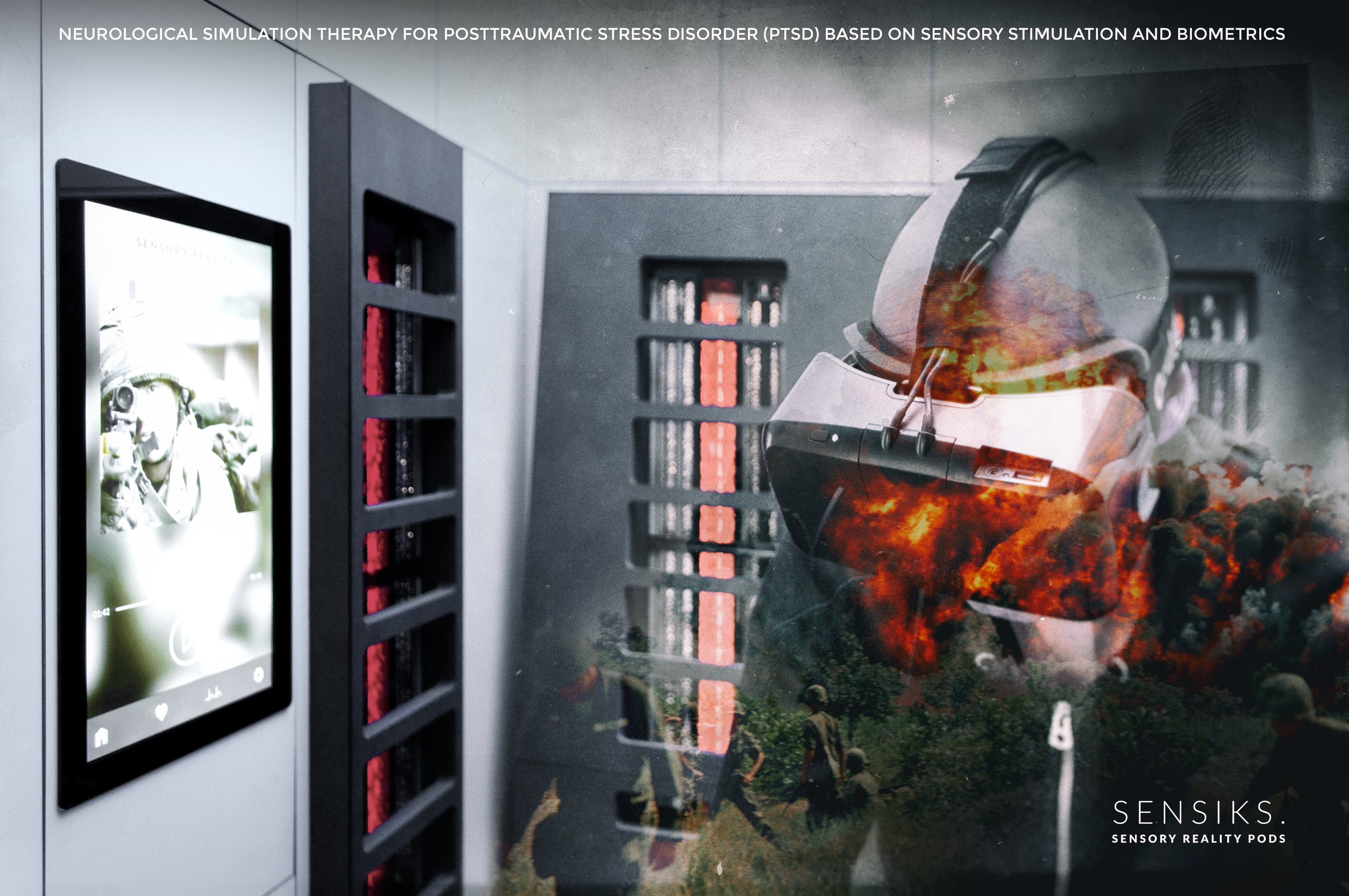
Visuals from Sensory Reality™ defense use-cases, including PTSD-focused XR scenes and multi-sensory pod deployments.
Co-Development with Defense & Research Partners
Dutch Ministry of Defence (MoD)
Collaboration on PTSD & resilience use-cases, exploring SR as a tool for prevention, decompression and recovery within existing care structures.
TNO Defence, Safety & Security
Joint work on multisensory simulation, human performance under stress, and evaluation of immersive protocols in realistic defense scenarios.
Leiden University Medical Center (LUMC)
Psychotrauma research partner, supporting protocol design, clinical metrics, and long-term outcome evaluation.
Enhancing Human Performance & Protection
- Enhances human performance under realistic, controllable stress conditions.
- Prevents cumulative stress overload during deployment.
- Supports PTSD prevention and recovery post-mission.
- Modular deployment across bases, hospitals, and rehabilitation centers.
- Edge-first privacy with GDPR/MDR/FDA-ready architecture.
Closed-Loop, Bio-Adaptive Architecture
Multisensory Orchestration
Closed-loop control across six sensory channels: visual, audio, scent, airflow, vibration, and temperature/NIR.
Real-Time Biofeedback
HRV, GSR, EEG, and respiration signals drive adaptive regulation, ensuring each session responds to the individual's state.
SENSAI™ OS
Adaptive dosing and content generation engine with outcome dashboards and fleet management for large-scale deployments.
Flexible Deployment for Defense Environments
Pods
Fully enclosed Sensory Reality™ Pods for bases, hospitals, and dedicated resilience hubs.
Room Kits
Kits to transform existing rooms into multisensory training and decompression environments.
Portable Modules
Compact, ruggedised modules for forward operations and base wellness hubs, offering rapid access after missions.
Peer-Reviewed Evidence Behind Sensory Reality™
Inline access to core scientific work on multisensory immersive PTSD treatment and brief PTSD interventions for veterans.
Multisensory Immersive Experiences & Wearable Passive BCIs for PTSD
Doctoral thesis by Belmir Jose de Jesus Junior (INRS-EMT) on multisensory immersive nature exposure and biosensor-instrumented VR for PTSD treatment and monitoring.
A Brief Treatment for Veterans with PTSD — Case-Series Study
Frontiers in Psychiatry (2023): open-label case series showing promising outcomes of a brief, reconsolidation-based treatment for combat-related PTSD in veterans.
Building Resilience Across the Mission Lifecycle
Sensory Reality™ brings together multisensory simulation, real-time biofeedback and adaptive AI to support defense personnel before, during and after missions. From stress inoculation and acute decompression to long-term recovery, SR offers a modular, data-informed approach to human protection.