Immersive Technologies in Analgesia
Chronic pain affects an estimated 1.9 billion people worldwide, driving huge human and economic costs. Traditional pharmacological approaches — especially opioids — bring risks of dependence, side effects and incomplete relief. In this context, virtual reality (VR) has emerged as a non-invasive, patient-centered and drug-free adjunct for pain management.
WHY VR FOR PAIN?
By deeply engaging attention in alternative, meaningful experiences, VR reduces the brain's capacity to register nociceptive signals. The addition of multisensory cues — scent, thermal feedback, vibroacoustic stimulation — may further enhance analgesia by increasing presence, embodiment and autonomic regulation.
Mechanisms Underlying VR Analgesia
VR analgesia builds on gate control theory and limited attentional resources: immersive, interactive virtual environments dominate sensory and cognitive processing, leaving less bandwidth to process pain. Neuroimaging confirms that VR can modulate activity in key pain-related regions.
Neural Mechanisms
- Reduced activation in the anterior cingulate cortex and insula during VR exposure.
- Patterns partially overlapping with those seen during opioid analgesia — but without drug exposure.
- Enhanced engagement of brain networks related to attention, emotion and reward.
Clinical Evidence
- 2024 meta-analysis (92 RCTs, n=7,133): significant pain reduction (SMD ≈ −0.78).
- Particularly strong effects in children and during acute procedures (venepuncture, wound care).
- Umbrella review (2023) confirms moderate-to-large benefits in chronic pain (fibromyalgia, low back pain, osteoarthritis).
- Postoperative trials show lower pain scores and reduced opioid consumption with VR adjuncts.
Physiological Effects
- Improved heart rate variability (HRV), indicating more balanced autonomic activity.
- Reduced stress markers during painful procedures.
- Greater emotional regulation and reduced pain unpleasantness, not only intensity.
Beyond Audiovisual: Engaging the Full Senses
Most early VR pain studies relied on audiovisual stimulation alone. However, human perception is inherently multisensory — combining visual, auditory, tactile, olfactory and thermal cues. Aligning these inputs increases presence, embodiment and emotional impact.
Olfactory Stimulation
Scents such as lavender, pine or ocean breeze can deepen immersion and support relaxation.
- Studies report additive reductions in anxiety and perceived pain when scent is added.
- Particularly relevant in burn care and procedural pain.
- Can help anchor positive associations with specific therapeutic environments.
Vibroacoustic Stimulation
Low-frequency vibrations (20–100 Hz) combined with soundscapes support muscle relaxation and parasympathetic activation.
- Evidence of benefit in chronic back pain, fibromyalgia, temporomandibular disorders.
- Improved HRV and perceived relaxation during and after sessions.
- Acts as a somatic "bridge" between virtual scenes and the physical body.
Thermal & Tactile Feedback
Near-infrared warm panels, subtle airflow and localized tactile cues deepen the sense of embodied presence.
- Gentle warmth linked to lower pain unpleasantness in experimental paradigms.
- Thermal cues can signal safety (e.g., warm campfire, sun on skin).
- Combined tactile and thermal feedback can guide breathing and relaxation.
EMERGING EVIDENCE
Smaller RCTs that combine visual, auditory, tactile, olfactory and thermal modalities report greater pain relief and larger shifts in HRV than audiovisual VR alone, suggesting synergistic effects of multisensory integration.
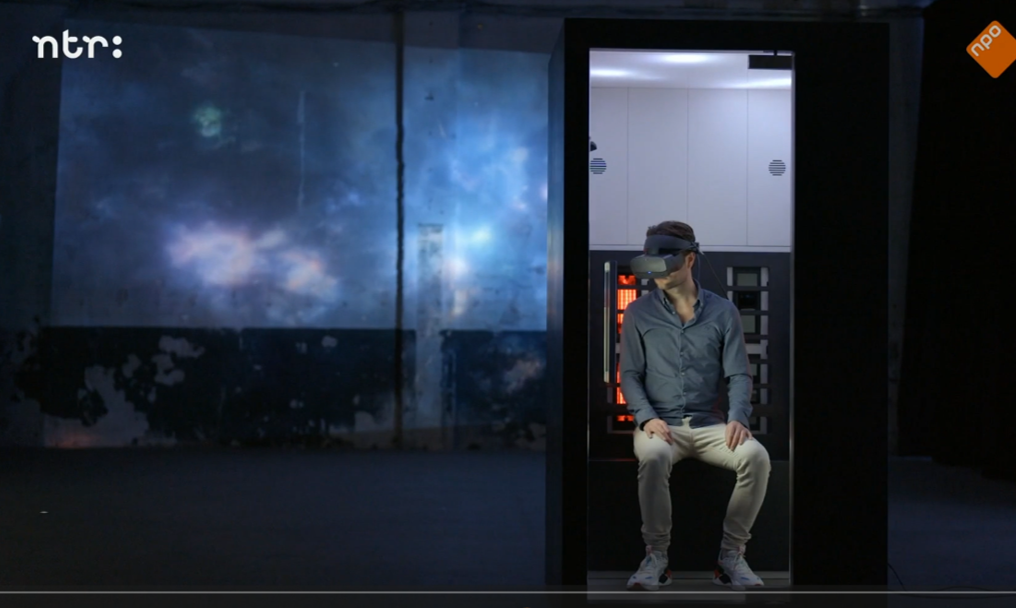
Sensiks Sensory Reality Pods as Integrated Multisensory VR
Sensiks Sensory Reality Pods exemplify an integrated approach to multisensory VR, combining a VR headset with controlled environmental stimuli and real-time biofeedback to create adaptive, personalized sessions.
Hardware & Sensory Stack
- Standard VR headset for immersive visuals.
- Scent diffusion modules synchronized to virtual environments.
- Near-infrared thermal panels for safe, natural-feeling warmth.
- Vibroacoustic transducers integrated into seating or flooring.
- Airflow and climate control to match scenes (breeze, cool air, etc.).
SENSAI™ Adaptive Engine
An onboard AI engine (SENSAI™) integrates physiological signals and session parameters.
- Real-time monitoring of HRV, heart rate and galvanic skin response (where available).
- Automatic adjustment of intensity, pacing and stimuli to keep users in an optimal arousal zone.
- Potential to personalize protocols for different pain profiles and comorbidities (e.g., anxiety, PTSD).
Clinical Use Cases
Deployed since 2018 mainly for mental health and stress regulation, Sensiks pods are now being explored in pain contexts via the stress–pain connection.
- Trauma-related pain and somatic symptom disorders.
- Burn care and wound dressing procedures.
- Chronic musculoskeletal pain, including low back pain and fibromyalgia.
ILLUSTRATIVE CONFIGURATION
A typical pain session might combine a calm nature scene, warm infrared "sunlight", ocean scent, gentle vibroacoustic pulses synchronized with breathing, and HRV-guided pacing — turning VR from a simple distraction tool into a multisensory self-regulation environment.
Current Limitations & Open Questions
Despite strong promise, VR and multisensory systems for pain management face practical and scientific challenges that future work must address.
Study Heterogeneity
- Wide variation in devices, session lengths and intervention protocols.
- Mixed patient populations (acute vs. chronic, adults vs. children).
- Need for standardized outcome sets and reporting.
Cybersickness & Comfort
- 10–20% of users experience cybersickness or discomfort with HMDs.
- Multisensory grounding may help, but careful design and calibration are essential.
- Alternative setups (e.g., cabin-based immersion) may be needed for sensitive populations.
Access & Equity
- High-end systems can be expensive and resource-intensive.
- Need for scalable, lower-cost hardware options, including smartphone-based VR.
- Ensuring accessibility in under-resourced clinics and home settings.
Where Multisensory VR for Pain Is Heading
As evidence accumulates, VR is moving from experimental add-on to a structured component of multimodal pain care — with multisensory systems poised to play a leading role.
KEY PRIORITIES
- Head-to-head comparisons of audiovisual vs. multisensory VR in well-defined pain populations.
- Longer-term studies evaluating durability of pain relief and functional gains.
- Standardized protocols around session length, frequency and content personalization.
- Integration with existing pain clinics, rehab programs and home-based care pathways.
Ultimately, multisensory VR platforms — from full Sensory Reality Pods to lighter configurations — may help shift pain management toward personalized, engaging, and drug-sparing strategies.
Toward Personalized, Multisensory, Drug-Free Pain Management
VR is already an established adjunct for reducing acute and chronic pain. By adding synchronized multisensory inputs and intelligent biofeedback, platforms like Sensiks Sensory Reality Pods aim to amplify these benefits and make analgesia more immersive, personalized and sustainable — in hospitals, clinics and ultimately at home.