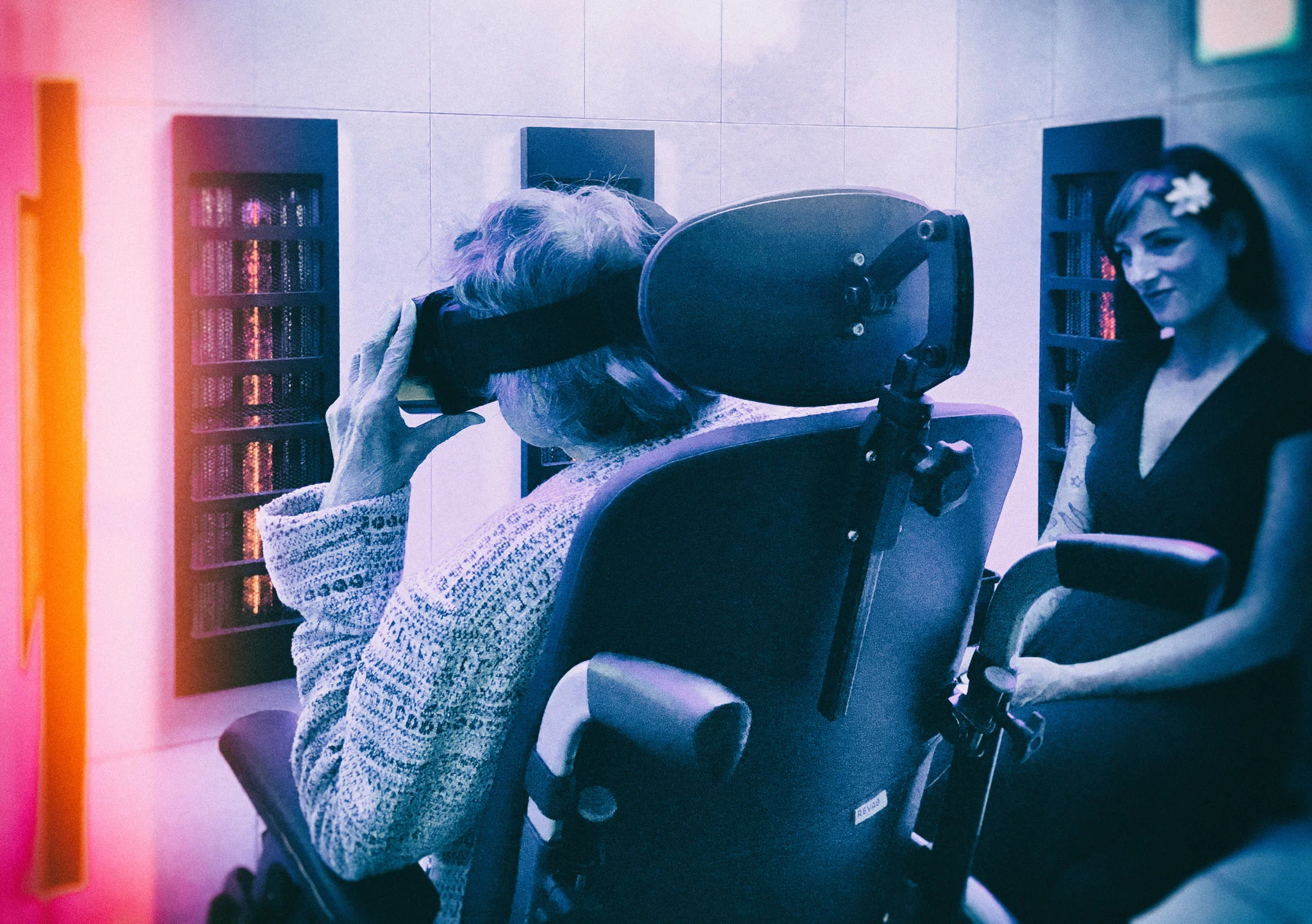
Multi-Sensory Technology Improves Well-Being for People with Intellectual Disabilities
A pioneering pilot study conducted by TNO in collaboration with Philadelphia care institution and Sensiks shows that immersive, multi-sensory environments can positively impact quality of life and emotional well-being for people with intellectual disabilities.
HEADLINE RESULT
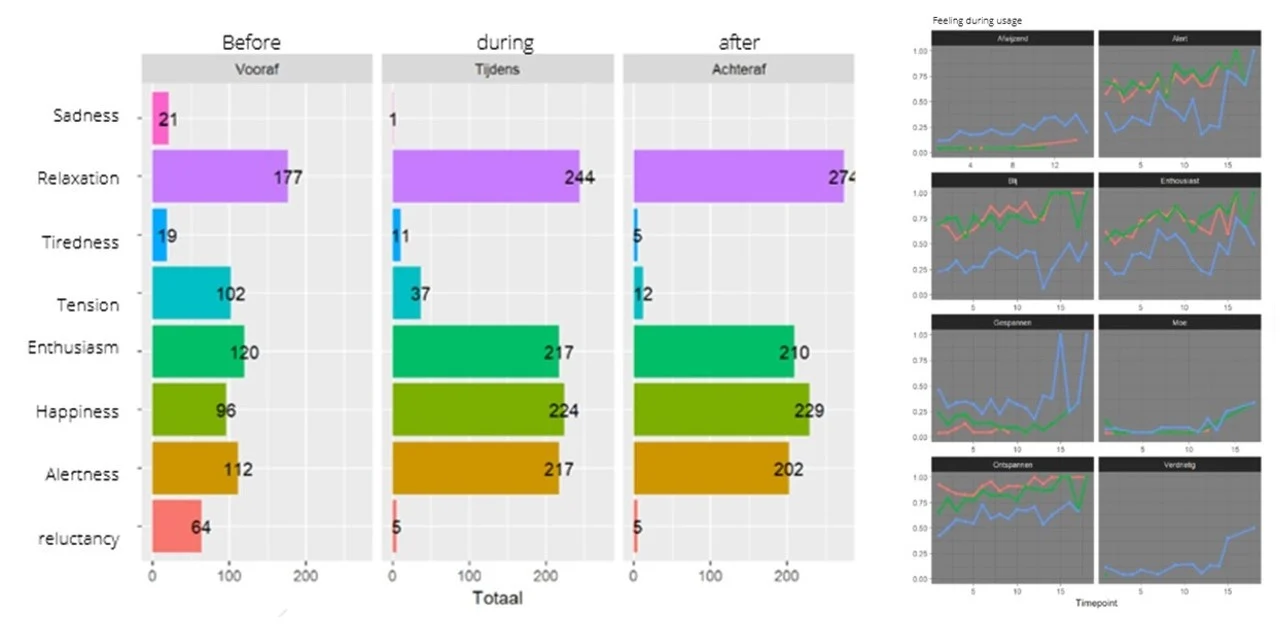
Across 125 participants, sessions in the Sensory Reality Pod were associated with increased relaxation and happiness, reduced tension and anxiety, and evidence of cumulative benefits with repeated exposure — particularly in the core group with multiple sessions.
Addressing Quality of Life in Intellectual Disability Care
Philadelphia (NL) is a nationally recognized care institution focused on supporting people with intellectual disabilities. The organization continually explores novel approaches to enhance residents' quality of life, especially for those who may not benefit fully from traditional therapies.
Challenges for Residents
- Difficulties with verbal communication and emotional expression.
- Challenges processing complex therapeutic instructions.
- Limited engagement with abstract treatment concepts.
- Restricted access to standard recreational activities.
- Anxiety, sensory overload and limited sense of autonomy.
Why Multi-Sensory Immersion?
Rather than relying on language-heavy or cognitively complex interventions, Philadelphia identified the Sensiks Sensory Reality Pod as a way to work via direct sensory experience, meeting residents at the level of perception and feeling.
TNO's Scientific Role
TNO advised on study design and independently analyzed the anonymized data, providing descriptive statistics and objective reporting while emphasizing both the promise of the findings and the methodological challenges of quality-of-life research in this population.
The Sensory Reality Pod and Three Participant Groups
The Sensiks Sensory Reality Pod creates synchronized multi-sensory environments and was evaluated across three participant groups with differing support needs.
The Sensory Reality Pod
- High-resolution projected imagery for immersive scenes.
- Spatial audio tailored to each environment.
- Scent delivery systems to match context (e.g., forest, beach).
- Wind and airflow effects, plus temperature modulation.
- Atmospheric lighting for mood and realism.
The system was developed with input from TNO specialists to align sensory design with scientific understanding of perception and neurophysiology.
Group 1: Non-Core (n=93)
Single exposure to the cabin, with one experience per participant.
Most common experiences:
- African Savannah – Elephants (32 participants)
- Sunny Beach – Beach (21)
- Magical Forest – Magical Forest (15)
- Helvetica – Mountains (13)
Group 2: Core Non-EMB (n=26)
Multiple visits (2–17 sessions) with varied experiences.
Most common experiences (total sessions):
- Sunny Beach – Beach (94)
- African Savannah – Elephants (80)
- Magical Forest – Magical Forest (64)
- Helvetica – Mountains (9)
Group 3: Core EMB (n=6)
Participants with severe multiple disabilities and highest support needs.
Most common experiences (total sessions):
- Magical Forest – Magical Forest (27)
- Helvetica – Mountains (23)
- Forest Experience – Forest (13)
- Vivaldi – 4 Seasons (9)
MEASUREMENT METHODOLOGY
- Emotions measured before, during and after each session (relaxed, happy, alert, enthusiastic, tense, sad, tired, rejected).
- Perception of individual sensory stimuli (wind, music, smell, image, light) and overall "convincingness" (1–5 scale).
- Observational data from supervisors and physiological monitoring (including heart rate).
Emotional Transformation & Cumulative Effects
The study revealed consistent emotional shifts and positive patterns across all three groups, with especially strong results in participants receiving multiple sessions.
Non-Core Group (Single Exposure)
- High ratings for convincing, comfortable environments across the four most-used experiences.
- Relaxation increased from baseline to during and again after sessions.
- Tension was common before sessions, decreased during and was almost absent afterward.
- Alertness peaked during experiences, indicating active engagement instead of sedation.
- Happiness was reported more often during and after experiences than before.
Core Non-EMB (Repeated Sessions)
- Positive emotions (relaxation, enthusiasm, happiness) were strongly represented during and after sessions.
- Negative emotions (tension, sadness, fatigue, rejection) decreased from before to during/after.
- Over multiple sessions, positive emotions tended to increase and baseline tension to decrease.
- Cumulative trends suggest therapeutic rather than purely novelty-based effects.
Core EMB (Severe Multiple Disabilities)
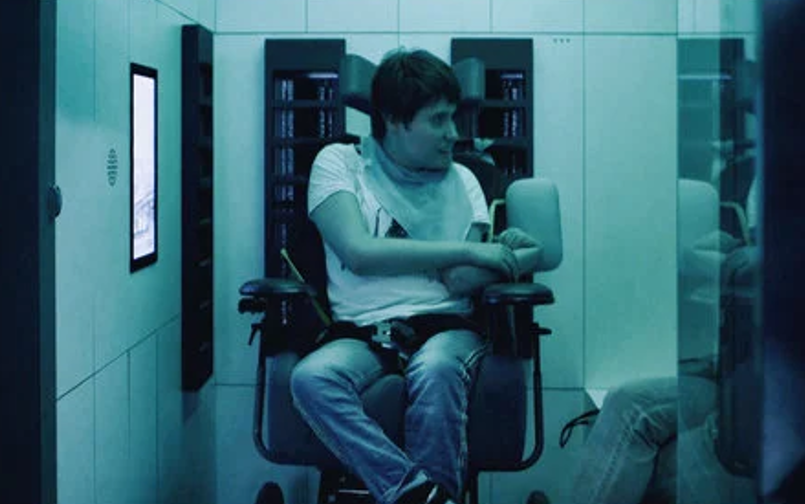
- Experiences were generally tolerated well with adapted implementation (e.g., minimal or no VR glasses).
- Some increases in relaxation and alertness during and after sessions were observed.
- TNO noted that small sample size (n=6) makes firm conclusions difficult but patterns were promising.
EMOTIONAL PROFILE
Overall, the pattern points to a state of "relaxed alertness": reduced anxiety and tension, increased calm and happiness, and maintained engagement — consistent with a therapeutic quality-of-life intervention.
Visuals from the Philadelphia Pilot
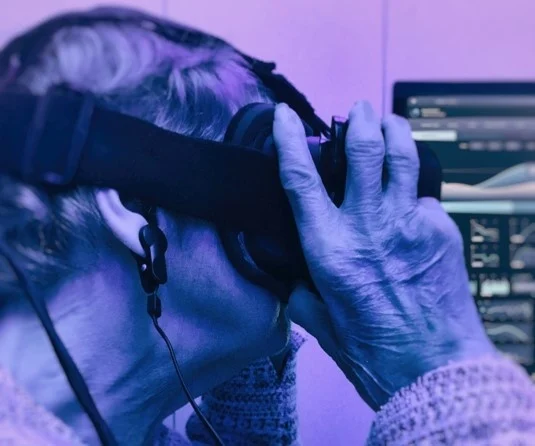
Images and video documenting the Sensory Reality Pod in use in care home settings and physiological monitoring during sessions.
Accessibility & Design Advantages
The Philadelphia pilot underlined several reasons why the Sensiks approach is well suited to people with intellectual disabilities and complex care needs.
Non-Invasive Immersion
- No obligatory head-mounted display; the environment itself becomes immersive.
- Supervisors remain visible, enhancing safety and trust.
- Easy and immediate exit from the experience if needed.
Fine Sensory Tuning
- Selective activation of sensory modalities (e.g., visuals without scent, sound without wind).
- Intensity of light, sound, airflow and temperature can be individualized.
- Suitable for participants with heightened sensory sensitivities.
Supervisor Accessibility
- Continuous visual monitoring and communication.
- Possibility of shared experiences with caregivers.
- Supports a strong sense of safety and containment for anxious participants.
PHYSIOLOGICAL SIGNALS
The pilot demonstrated feasibility of integrating heart rate monitoring, and future studies can further explore HRV and other autonomic measures to better understand mechanisms and optimize protocols.
From Pilot Evidence to Practice & Further Research
TNO's conclusion that the results are "certainly worth mentioning and possibly further research" suggests clear directions for both clinical implementation and more rigorous trials.
Immediate Anxiety Management
Strong reductions in tension and anxiety support use of the Sensory Reality Pod for:
- Daily stress-regulation sessions.
- Pre-procedure or pre-appointment calming routines.
- Transition support between demanding activities.
Programmatic Use
The cumulative effects in the repeated-session group suggest value in structured programs (e.g., weekly or bi-weekly sessions) rather than one-off experiences.
Future Research Directions
- Randomized controlled trials and crossover designs.
- Long-term follow-up on mood, sleep and behavior.
- More extensive physiological and behavioral measurement.
- Extension to other populations (dementia, autism, psychiatric care, pediatrics).
Partners, Date & Reference
Partners
- Philadelphia — Dutch care institution for people with intellectual disabilities.
- Sensiks — Sensory Reality Pod technology and content.
- TNO — Netherlands Organisation for Applied Scientific Research (Microbiology and Systems Biology division).
Study Parameters
- Date: June 2018.
- Total participants: 125 (three groups).
- Non-Core Group: n=93 (single exposure).
- Core Group Non-EMB: n=26 (multiple exposures).
- Core Group EMB: n=6 (multiple exposures, severe multiple disabilities).
Reference & Status
- TNO report reference: 935120.
- Document status: TNO confidential research report.
- Conclusion: results warrant further research into multi-sensory quality-of-life interventions.
Bringing Multi-Sensory Quality-of-Life Technology into Intellectual Disability Care
This TNO-analyzed pilot study provides an evidence-based foundation for integrating multi-sensory immersive technology into care for people with intellectual disabilities. Sensiks' Sensory Reality Pod offers a flexible, accessible and research-ready platform for organizations ready to advance quality-of-life interventions.